

You’ve opened a shop, a small clothing brand, a home-based bakery, or a service business. The product is good. The service is solid. But customers are just not coming in the way you expected.
Meanwhile, you see other small businesses — sometimes with a weaker product — getting more orders, more calls, more foot traffic. What are they doing differently?
Most of the time, the answer is simple: they have a digital marketing strategy, and you don’t.
Your customers are already searching on Google, scrolling Instagram, and asking questions on WhatsApp before they buy anything. If your business isn’t visible there, you’re losing sales to competitors who are.
This guide breaks down a practical, step-by-step digital marketing strategy for small businesses in Pakistan — one you can actually apply, whether you run a boutique in Lahore, an academy in Multan, or an online store shipping across the country.
What Is Digital Marketing?
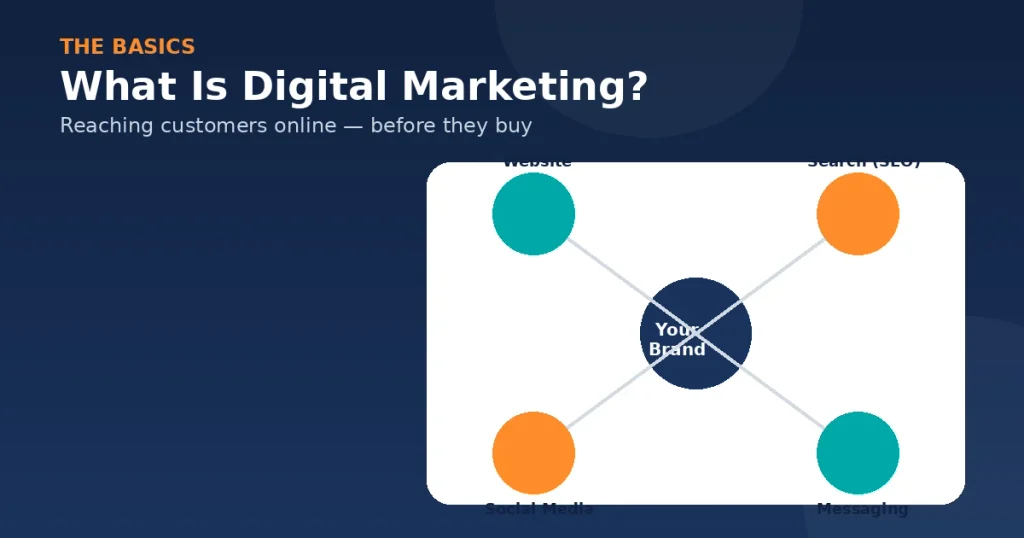
Digital marketing is the process of promoting your business online — through your website, search engines, social media, and messaging apps — to reach customers, build trust, and generate sales. It includes activities like SEO, social media marketing, paid ads, and content creation.
In simple words: it’s how people find you on Google, see your posts on Instagram, and message you on WhatsApp before deciding to buy.
Why Digital Marketing Matters for Small Businesses in Pakistan
Pakistan has one of the fastest-growing internet and smartphone user bases in the region. More people are shopping, searching, and comparing businesses online than ever before — especially in cities like Karachi, Lahore, Islamabad, Faisalabad, and Multan.
Here’s why this matters for your business:
- Traditional advertising (banners, pamphlets, FM ads) is expensive and hard to measure
- Customers now Google a business before visiting or calling
- Your competitors are likely already active on social media
- Digital marketing lets you target the exact area, age group, or interest you want
- You can start with a small budget and scale as results come in
If you run a small business in Islamabad, you don’t need to advertise across all of Pakistan. Start by reaching people in your own city or even your own neighborhood.
Step 1: Identify Your Target Customers
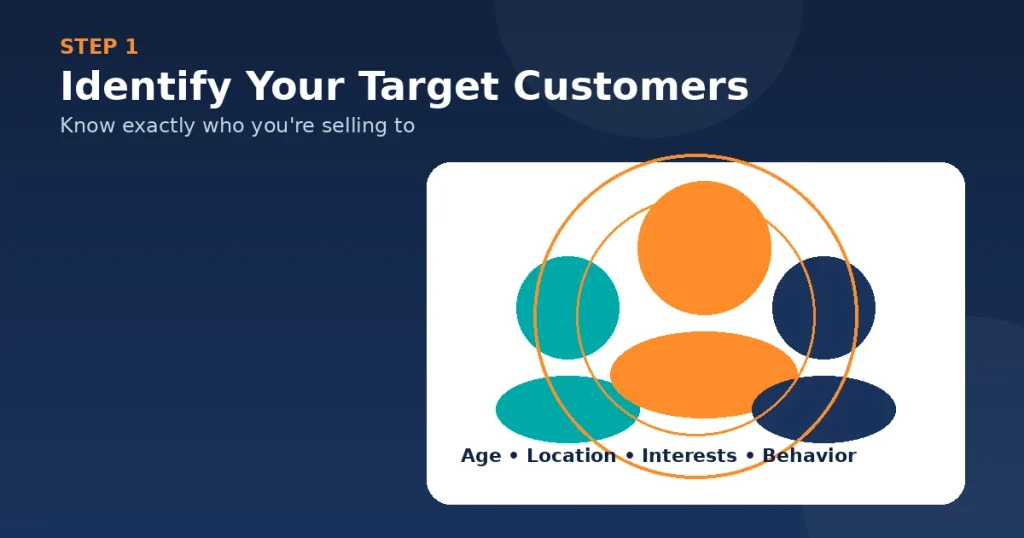
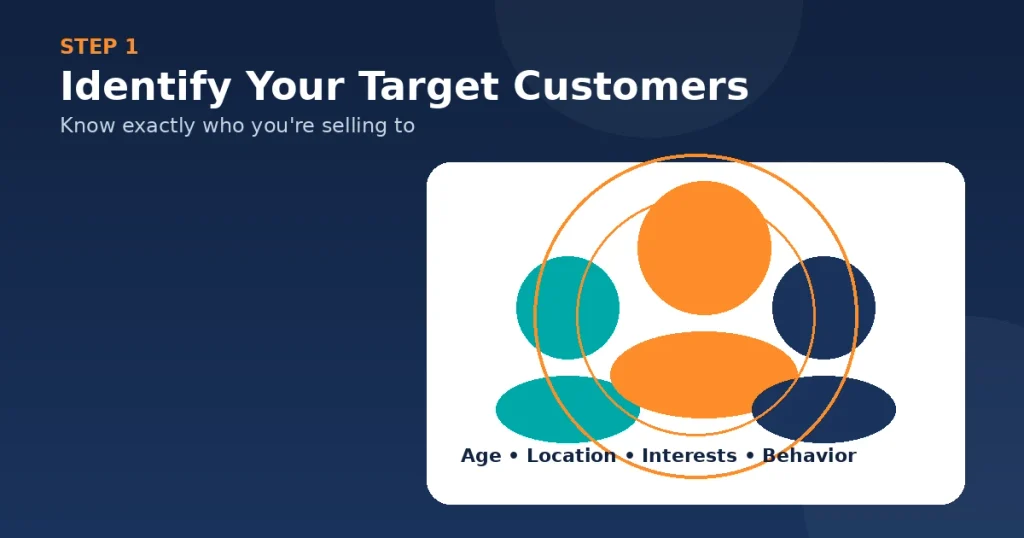
Before spending a single rupee on marketing, you need to know who you’re selling to.
What to do: Define your ideal customer by age, location, gender, income level, and buying behavior.
How to do it: Ask yourself simple questions:
- Who actually buys from me right now?
- Where do they live — same city, same area, or nationwide?
- What problem does my product or service solve for them?
- Are they price-sensitive or quality-focused?
Why it matters: Without this clarity, you’ll waste money running ads to the wrong audience.
Example: A ladies’ stitching academy in Rawalpindi doesn’t need to target men aged 18–24. Their real audience is women aged 20–45 living within a 5–10 km radius. Once they know this, every rupee spent on ads becomes more effective.
Step 2: Build a Professional Website
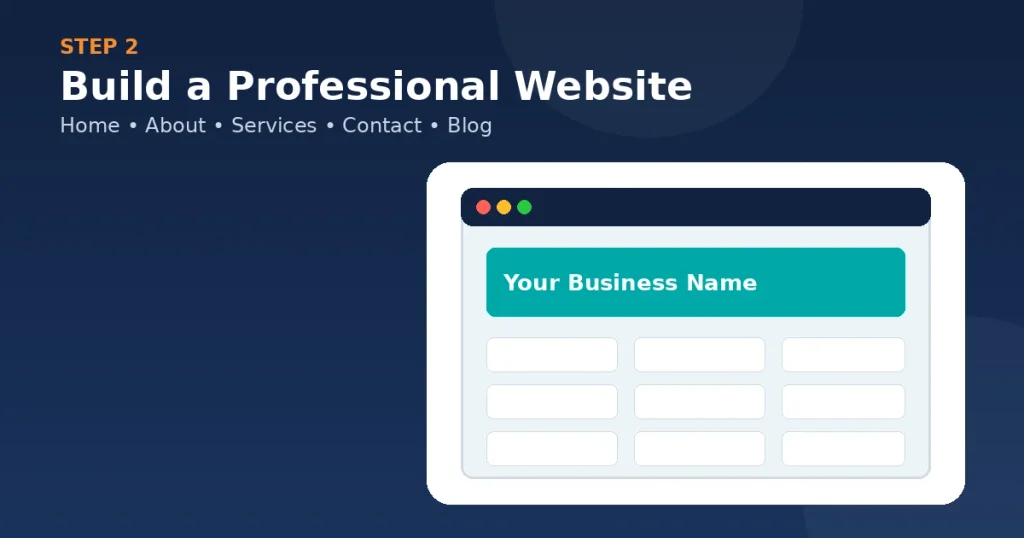
A lot of small businesses in Pakistan rely only on a Facebook page or Instagram profile. That’s a mistake.
What to do: Create a simple, mobile-friendly website with your services, contact details, and location.
How to do it: You don’t need a huge budget. A clean, 4–5 page website (Home, About, Services/Products, Contact, Blog) is enough to start.
Why it matters: A website builds trust. Customers often check a website before calling, especially for bigger purchases like real estate, education, or professional services. It also gives you something Facebook and Instagram can’t — full control, plus the ability to rank on Google.
Example: A real estate agency in Lahore with only a Facebook page loses credibility compared to a competitor with a proper website showing verified listings, pricing, and contact information.
Step 3: Use Local SEO
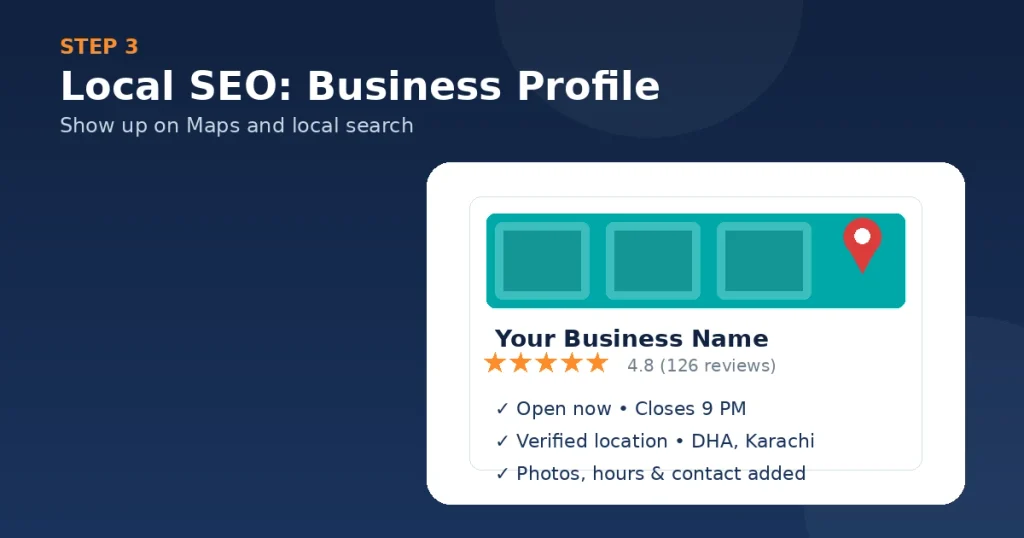
If you serve customers in a specific city or area, local SEO is one of the highest-return activities you can do.
What to do: Optimize your business for local searches like “bakery near me” or “best salon in DHA Karachi.”
How to do it:
- Create and verify your Google Business Profile
- Add correct business name, address, phone number, and hours
- Add real photos of your shop, products, or team
- Ask happy customers to leave Google reviews
- Use your city and area name naturally on your website (e.g., “salon in Gulberg, Lahore”)
Why it matters: Local SEO Pakistan searches (like “near me” searches) are high-intent — people searching this way are usually ready to buy or visit soon.
Example: A restaurant in Johar Town, Lahore, with a complete and active Google Business Profile will show up on Google Maps ahead of a similar restaurant that hasn’t claimed their listing.
Step 4: Create a Strong Social Media Presence
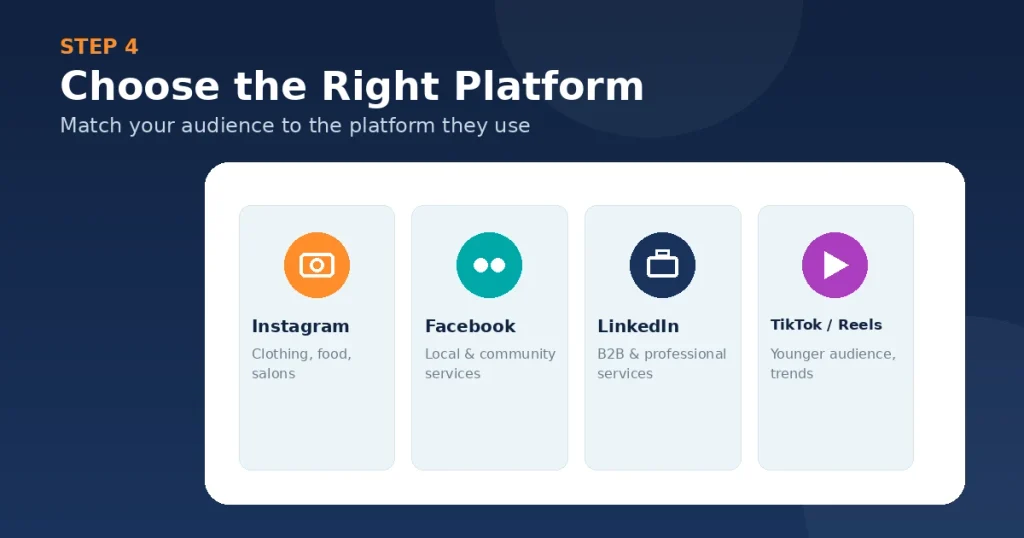
What to do: Pick 1–2 platforms where your target audience actually spends time — don’t try to be everywhere at once.
How to do it:
| Business Type | Best Platform |
| Clothing brand, salon, food business | |
| Local services, community-based business | |
| B2B, agencies, professional services | |
| Younger audience, trends, reels | TikTok / Instagram Reels |
Post consistently — even 3 posts a week done well beats 7 posts a week done poorly.
Why it matters: Social media builds familiarity. People buy from businesses they recognize and trust, not strangers.
Example: A home bakery in Karachi that consistently posts photos of fresh cakes, behind-the-scenes baking, and customer orders builds more trust than one that posts randomly once a month.
Step 5: Create Useful Content
Content marketing isn’t just for big brands. Small businesses can use it too.
What to do: Create content that answers your customers’ questions or shows your work.
How to do it:
- Write short blog posts answering common customer questions
- Share before/after photos (salons, home services, renovations)
- Post short videos explaining your product or process
- Share tips related to your industry
Why it matters: Useful content builds authority and helps your website rank on Google for relevant searches.
Example: A tuition academy could write a blog post titled “How to Prepare for O-Level Exams in 3 Months” — this attracts parents searching for exactly that topic.
Step 6: Use WhatsApp for Customer Communication
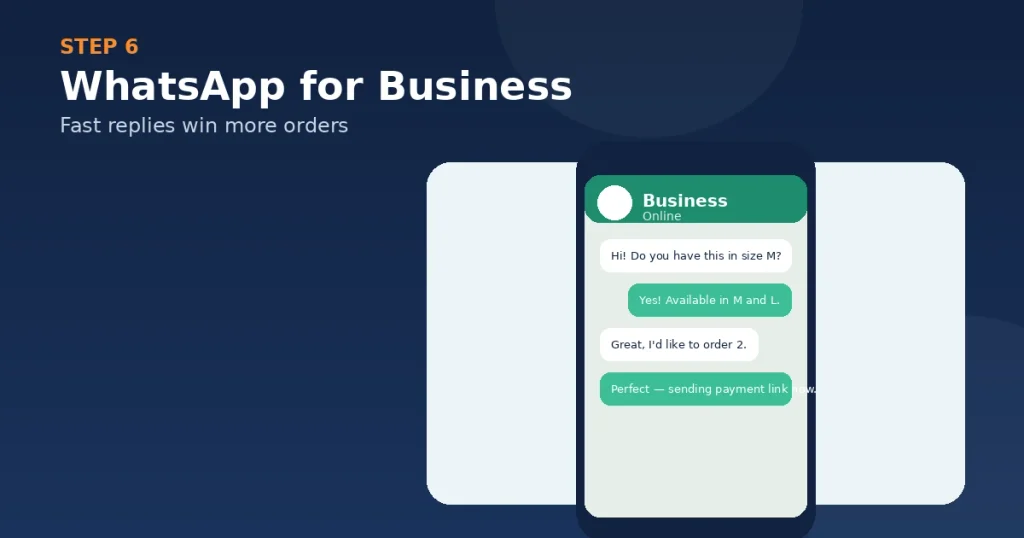
WhatsApp is one of the most underused tools by small businesses in Pakistan — and one of the most powerful.
What to do: Set up WhatsApp Business and use it as your main customer communication channel.
How to do it:
- Switch to WhatsApp Business (it’s free)
- Add your catalog, business hours, and quick replies
- Use broadcast lists for offers (with customer consent)
- Respond quickly — speed matters
Why it matters: Most Pakistani customers prefer messaging over calling or emailing. A slow WhatsApp reply often means a lost sale.
Example: An online clothing store that replies to WhatsApp inquiries within minutes will convert far more orders than one that replies after a day.
Step 7: Invest in SEO
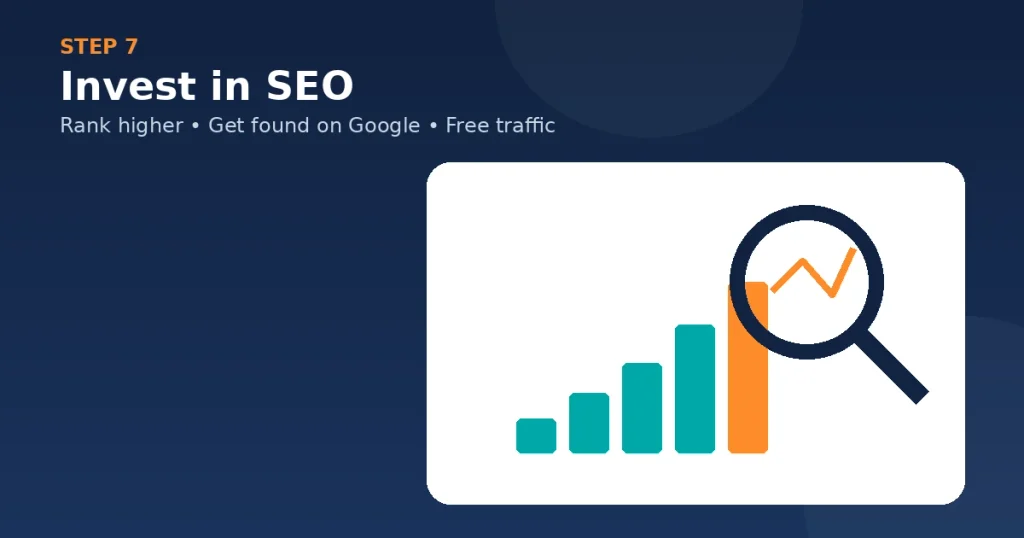
SEO for small businesses is a long-term investment, but it pays off with free, consistent traffic.
What to do: Optimize your website so it ranks on Google for searches your customers are actually making.
How to do it:
- Research keywords your customers search for
- Use those keywords naturally in page titles, headings, and content
- Improve website speed and mobile experience
- Get other relevant websites to link back to yours
Why it matters: Unlike ads, SEO keeps bringing traffic even after you stop actively “spending” — though it takes time to build.
Example: A furniture business in Faisalabad that ranks for “wooden furniture Faisalabad” gets steady inquiries without paying for every single click.
Step 8: Use Google Ads
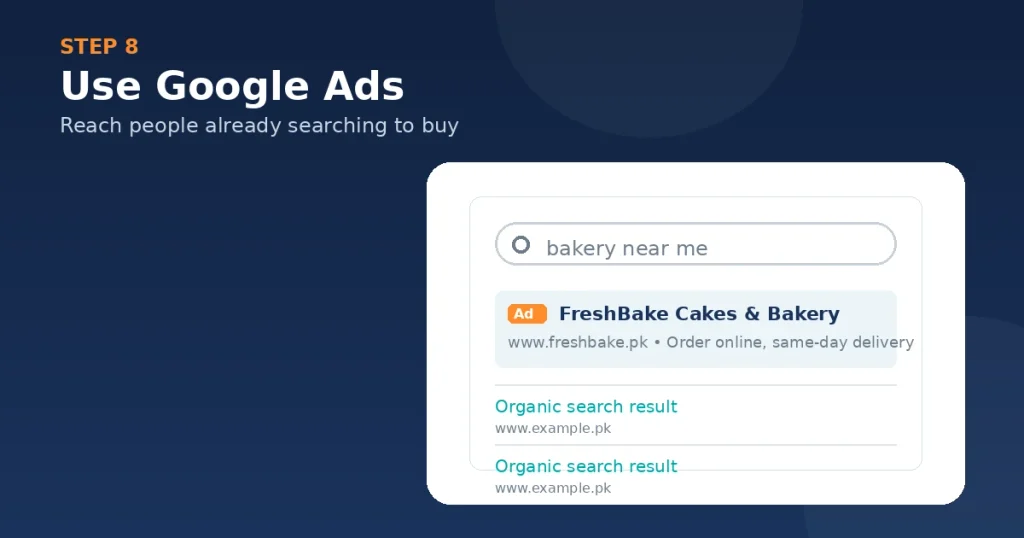
Google Ads Pakistan campaigns are ideal for businesses that want fast, high-intent traffic.
What to do: Run search ads that appear when people search for your product or service.
How to do it:
- Start with a small daily budget
- Target specific keywords related to your business
- Write clear ad copy with a strong call-to-action
- Track calls, form submissions, or WhatsApp clicks from ads
Why it matters: Google Ads puts you in front of people who are already searching to buy — not just browsing.
Example: A dentist in Islamabad running ads for “dental clinic near me” gets inquiries from people actively looking for an appointment, not casual scrollers.
Step 9: Use Facebook and Instagram Ads
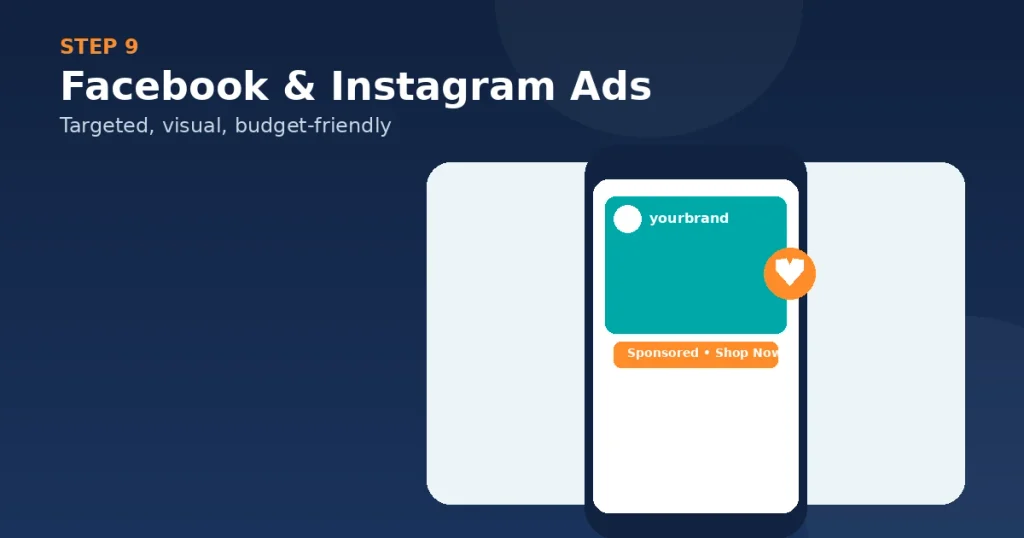
What to do: Run targeted ads to reach specific audiences based on location, age, and interests.
How to do it:
- Start with a small test budget (even a few hundred rupees a day)
- Use eye-catching images or short videos
- Target by city, area, age, and interest
- Test 2–3 ad variations to see what performs better
Why it matters: These platforms are excellent for visual products — clothing, food, jewelry, home decor — because people can see the product before deciding.
Example: A shoe brand targeting women aged 20–35 in Karachi with a simple video ad often sees better results than a generic ad shown to everyone in Pakistan.
Step 10: Build Trust With Reviews and Testimonials
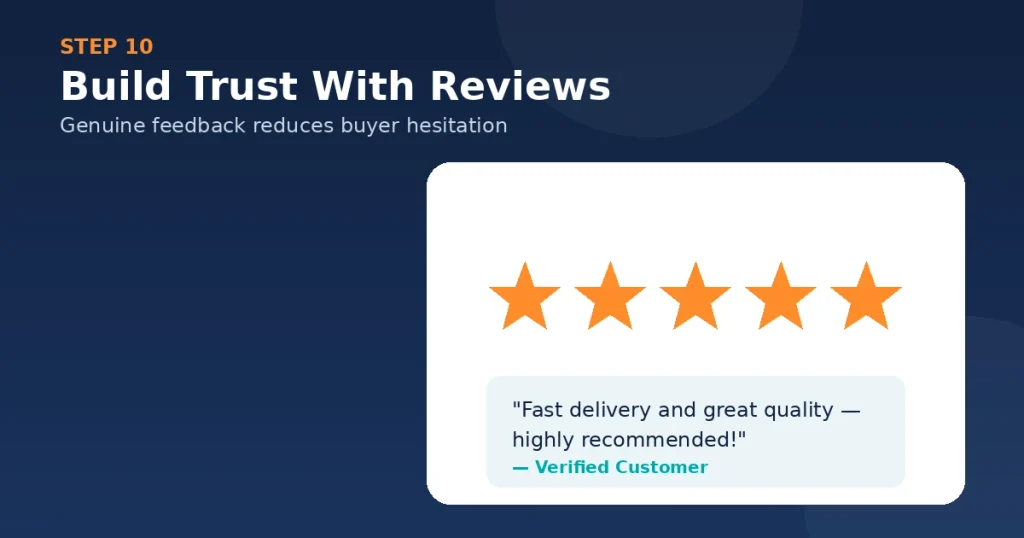
What to do: Collect and display genuine customer reviews.
How to do it:
- Ask satisfied customers directly for a Google or Facebook review
- Share screenshots of positive WhatsApp feedback (with permission)
- Respond politely to negative reviews instead of ignoring them
Why it matters: Pakistani buyers are often cautious about online purchases due to past scam experiences. Genuine reviews reduce that hesitation.
Note: If you plan to reference any statistics on online trust or review behavior, link to a credible source such as a consumer research report rather than assuming a figure.
Step 11: Create a Content Calendar
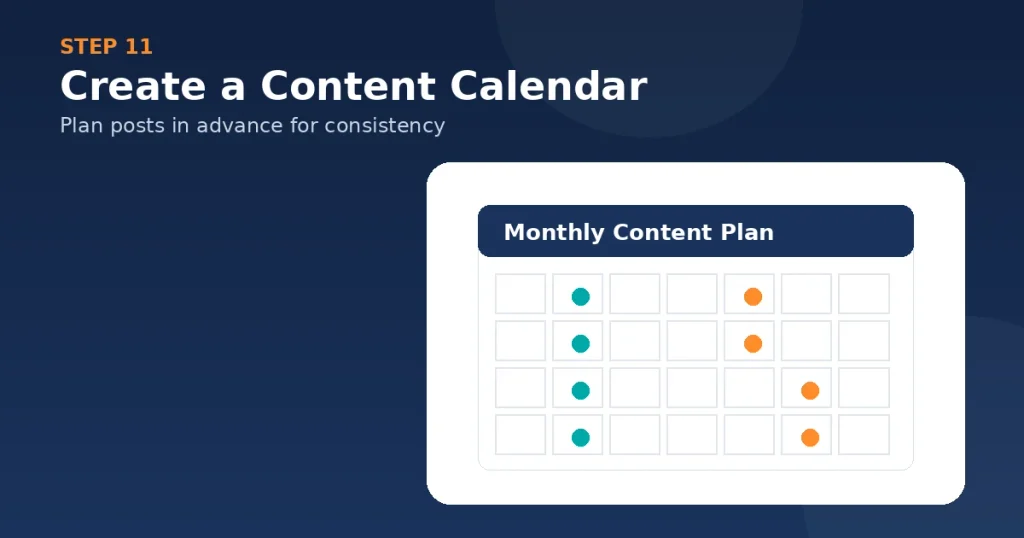
What to do: Plan your posts and content in advance instead of posting randomly.
How to do it: Set aside one day a week or month to plan:
- What to post
- On which platform
- On which days
- With what goal (awareness, engagement, or sales)
Why it matters: Consistency builds trust and keeps your audience engaged. Random posting leads to random results.
Step 12: Track Your Marketing Results
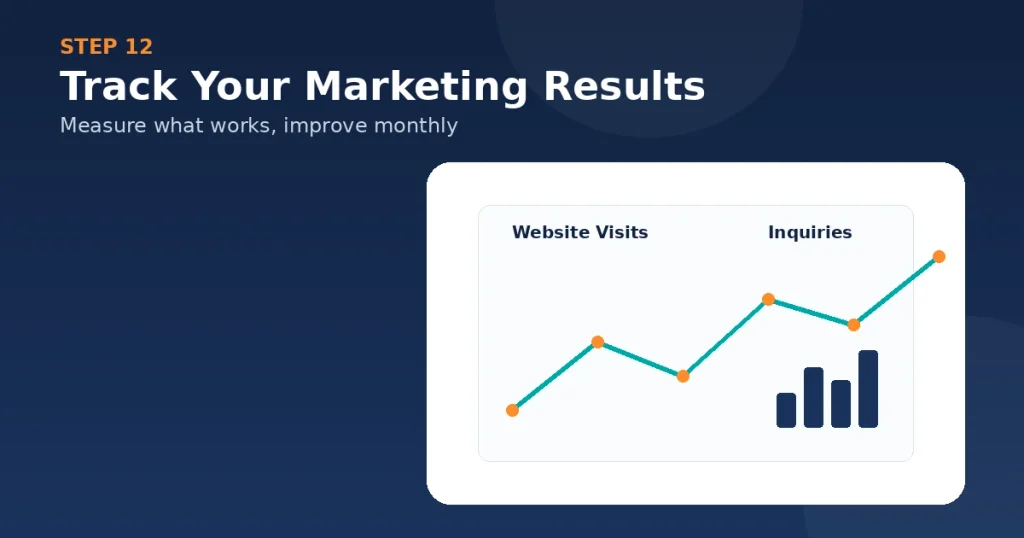
What to do: Measure what’s working and stop what isn’t.
How to do it:
- Use Google Analytics to track website visitors
- Check Meta Ads Manager for ad performance
- Track which platform brings the most inquiries or sales
- Review results monthly, not daily (avoid overreacting to short-term dips)
Why it matters: Without tracking, you’re guessing. With tracking, you’re improving.
Common Digital Marketing Mistakes Small Businesses Make
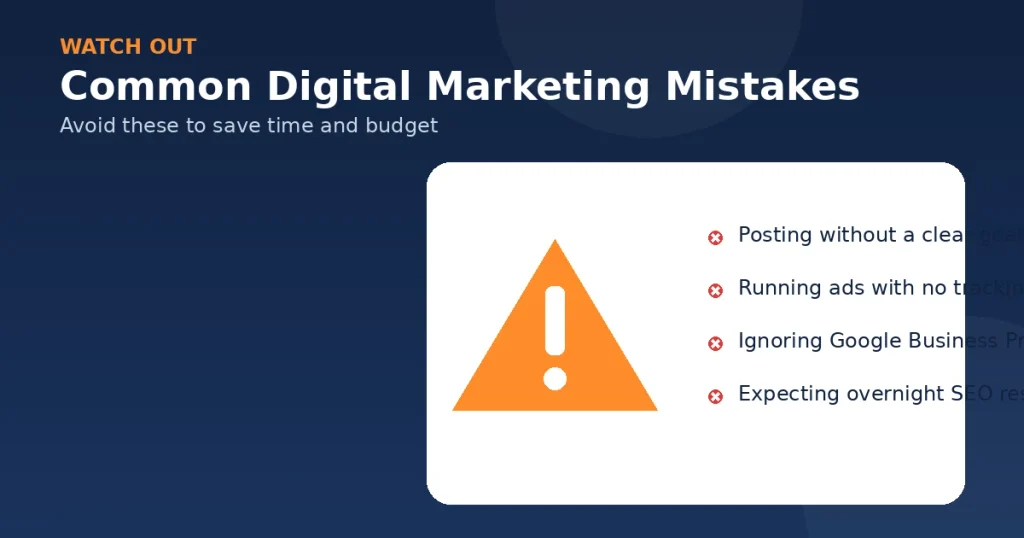
- Posting on social media without a clear goal
- Running ads without tracking results
- Ignoring Google Business Profile
- Copying competitors instead of understanding their own audience
- Expecting overnight results from SEO
- Not replying to messages quickly
- Spending the entire budget on ads with no organic presence to back it up
A Simple 90-Day Digital Marketing Strategy
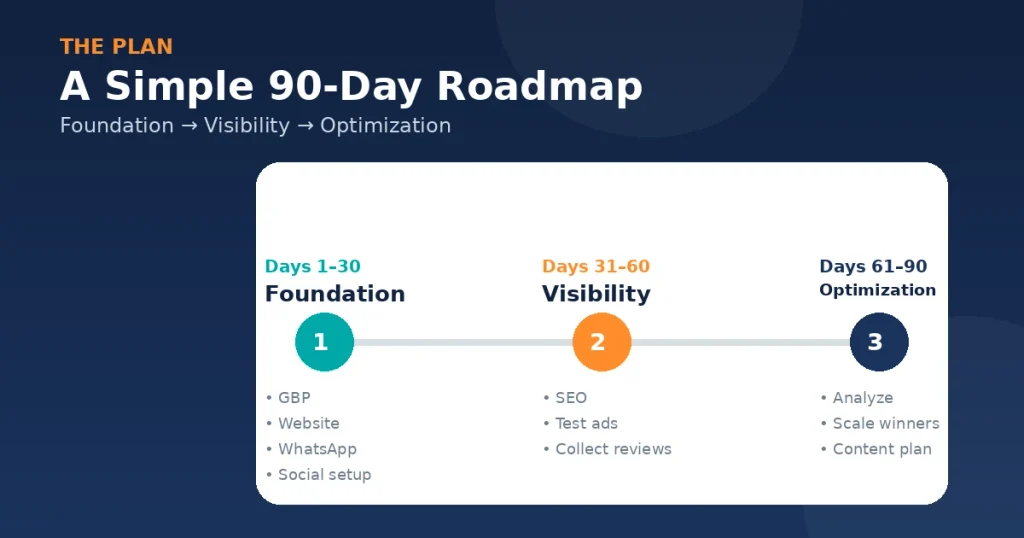
If you’re starting from zero, here’s a realistic roadmap:
Days 1–30: Foundation
- Set up Google Business Profile
- Build or improve your website
- Set up WhatsApp Business
- Start posting on 1–2 social platforms
Days 31–60: Visibility
- Start basic SEO (keywords, content, local listings)
- Launch small test ads on Facebook/Instagram or Google
- Begin collecting reviews
Days 61–90: Optimization
- Analyze what’s working
- Increase budget on best-performing ads
- Build a content calendar for the next quarter
- Double down on the platform bringing the most customers
Frequently Asked Questions
What is the best digital marketing strategy for a small business in Pakistan?
The best strategy combines a professional website, local SEO, an active social media presence, and consistent WhatsApp communication. Start with the platforms your customers already use, then add paid ads once you understand what works.
How much does digital marketing cost in Pakistan?
Costs vary widely depending on your goals. You can start social media marketing with a few hundred rupees a day in ad spend, while SEO and website development are usually a one-time or monthly investment. It’s best to start small, test results, then scale your budget.
Is SEO useful for small businesses?
Yes. SEO for small businesses helps you get found on Google without paying for every visitor. It takes longer than ads to show results, but it builds long-term, sustainable traffic.
Should a small business use Google Ads?
If your customers actively search for your product or service on Google, yes. Google Ads Pakistan campaigns work well for businesses with clear buying intent, like clinics, real estate, or repair services.
Which social media platform is best for Pakistani businesses?
It depends on your business type. Instagram works well for visual products like clothing and food. Facebook suits local, community-based services. LinkedIn is better for B2B and professional services.
How can I get more customers online in Pakistan?
Focus on being visible where your customers search — Google, social media, and WhatsApp. Combine local SEO, consistent content, and targeted ads instead of relying on just one channel.
Do I need a website if I already have a Facebook page?
Yes. A website gives you more credibility, better control over your content, and the ability to rank on Google — something a Facebook page alone cannot do.
How long does it take to see results from digital marketing?
Paid ads can bring inquiries within days. SEO and organic social media growth usually take a few months to show meaningful, lasting results.
Final Thoughts
You don’t need a huge budget to start marketing your small business online. You need a clear strategy, consistency, and a willingness to test and improve.
Start with the basics — a good website, an active Google Business Profile, and responsive WhatsApp communication. Then build from there with content, SEO, and paid ads as your budget allows.
Small, steady steps in the right direction will always beat random, one-off marketing efforts.
Need Help Building Your Digital Marketing Strategy?
If you’re a small business owner in Pakistan and want help setting up your website, running SEO, or managing your social media and ads, Ammad Ud Din Marketer can help you build a strategy suited to your budget and goals. Feel free to reach out for a conversation about where your business currently stands and what the next right step looks like.